Practical Generative Engine Optimization (GEO) and AI-search guidance for marketplace sellers—clearer listings, stronger product signals, honest limits.
New to the category? What is GEO for marketplace sellers?
Cloudflare's August 7 update confirms hybrid human-agent shopping sessions are now common, and introduces Poison mode that serves fake prices to detected bots. Here's what marketplace sellers need to check before bot defenses block the agents they want.
After Etsy removed the Materials tag field in March 2026, jewelry sellers must consolidate metal evidence in the Materials attribute, variations, and description. Here is the field-by-field guide.
Cloudflare's new AEO Visibility Dashboard probes AI assistants with real shopping queries and measures whether your brand gets cited, mentioned, or passed over — the first tool to track recommendation outcomes, not just crawl behavior.
Google's official AI optimization guide now describes how agents read your site — DOM, accessibility tree, screenshots — and links to web.dev's six design rules plus emerging protocols like WebMCP. Most marketplace listings fail the structure test. Here is what to fix.
A Shopify field playbook for apparel sellers: use variants, category metafields, and size-chart metafields to answer 'will this fit me?' — and know what each field can and cannot prove.
Google's July 29 global rollout of platform properties lets sellers track TikTok, Instagram, X, and YouTube content in Search Console — with click data the AI reports don't have. Here's how to use it.
On July 1, 2026, Cloudflare and Ceramic.ai launched the first AEO reporting that shows which queries, snippets, and ranking positions lead AI answer engines to your content — data Google does not provide. Here is what marketplace sellers need to know.
A current Etsy digital-listing clinic: state the app, device, file package, and limits clearly—without using unavailable variations.
AI search is splitting your content into two markets: one that sends visitors, one that consumes your listing inside answers without a click. Here's how the economics work — and what to optimize.
A new study of 1,094 ChatGPT categories finds only 15% have a brand that clearly owns the topic - and the most-asked topics are the least dominated. For marketplace sellers, AI visibility is won at the topic level, not the prompt level, and most categories are still winnable.
Survey data from 1,600+ buyers reveals that brand recognition and ranking position barely matter in AI search. Only 7% of buyers notice a brand because they recognize the name. What wins is specificity — use-case matching, clear descriptions, and stated benefits. Here is what sellers should do.
On September 15, 2026, Cloudflare splits the single 'Block AI Bots' switch into Search, Agent, and Training — three decisions that decide whether your products get cited, bought by an agent, or absorbed into a model. Here is what sellers should do before the default changes.
In May 2026, Amazon's Buy for Me and Google's Agent Payments Protocol let AI agents complete purchases on a shopper's behalf. Shopify reports AI-attributed orders up 11x. The seller question is shifting from 'will the AI cite me?' to 'can the AI buy from me?' — and most listings aren't ready.
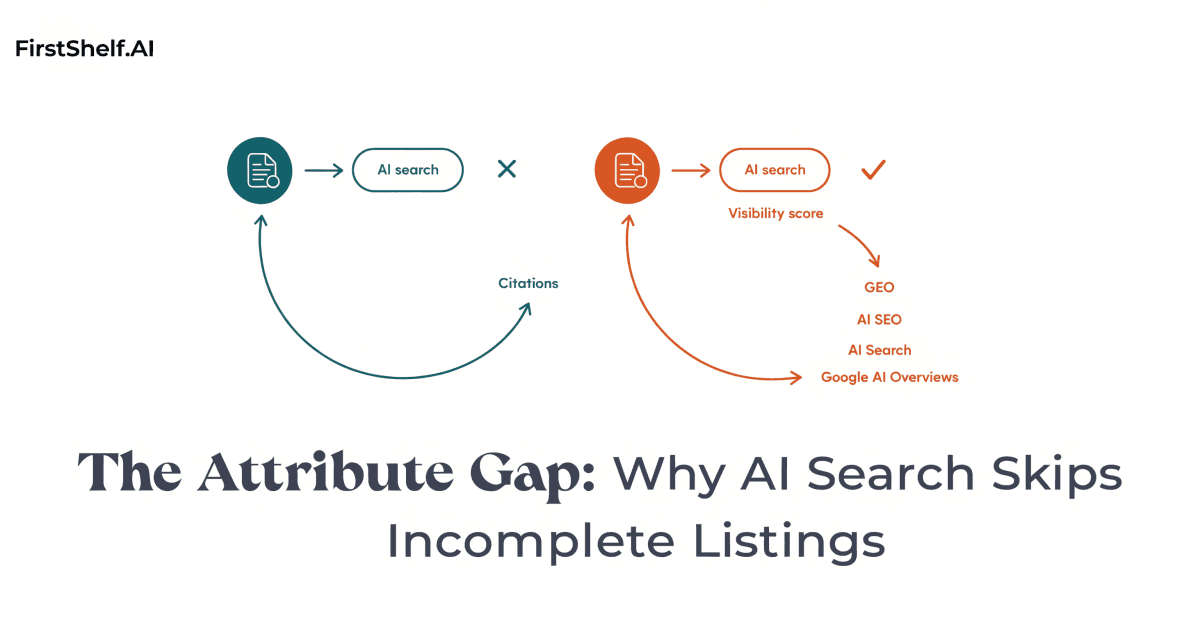
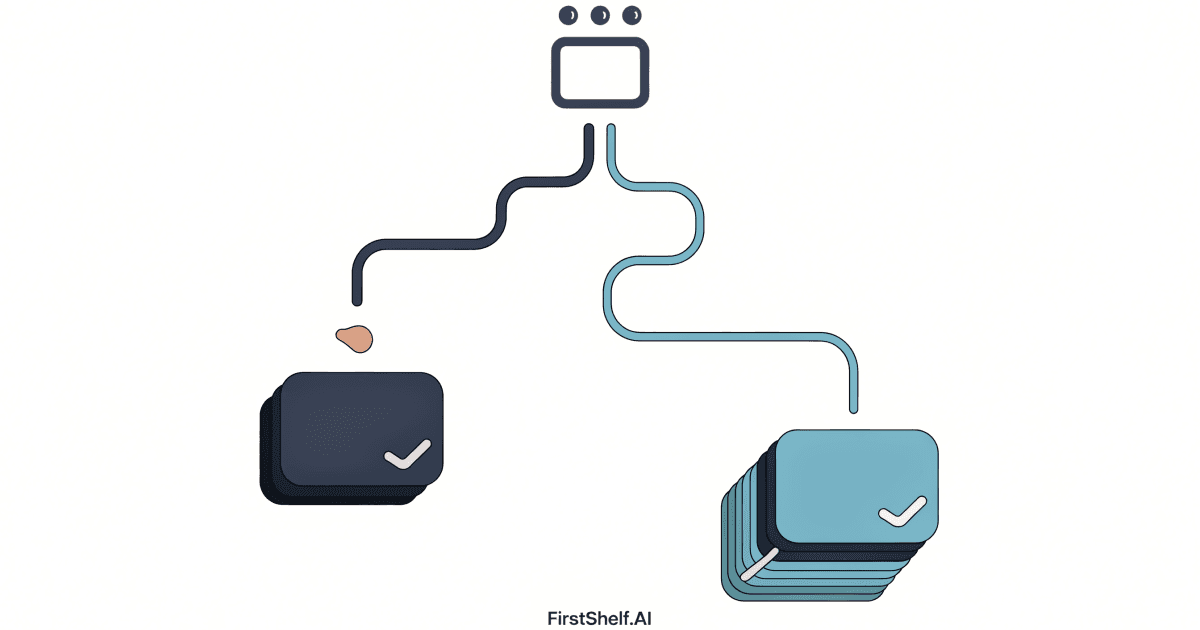
AI shopping engines filter and compare products by structured attributes — brand, GTIN, size, shipping, returns — not keywords. An anonymized FirstShelf audit of 21 listings found entity authority scored just 30.8 out of 100. Here is how to close the attribute gap.
ChatGPT's Thinking mode shares only 25.6% of cited sources with quick-answer mode, a Semrush and Kevin Indig study found. Complex comparison questions trigger deeper research that favors documentation over Reddit. Here's how to make your listings citable in both modes.
Google's AI Mode data shows queries are now triple the length of traditional searches, and follow-up questions grow 40% monthly. Yet most product listings are still written for 3-word keywords. Here is how to rewrite your content for the questions buyers actually ask.
AI search reads your product images, not just your text. Google Lens surfaces reviews and prices from one photo, Circle to Search reaches 150M+ devices, and Product structured data feeds it all. Here are the five signals that decide whether AI search can cite your images.
AI agents like ChatGPT Atlas and Microsoft Playwright read your site through the accessibility tree — not pixels — the structure screen readers use. As bots overtake human traffic and 95.9% of pages fail structure tests, here’s how to make listings legible to the agents that recommend them.
Google's AI cites your content but recommends your competitor 69% of the time. A newly analyzed Google patent reveals how AI builds entity profiles — and why brand authority, not citation count, now determines who gets recommended in AI search.
BrightEdge's June 2026 research shows the same Reddit citation reads as a trusted authority in ChatGPT and as crowd chatter in Google AI Overviews — a '6x authority flip' driven by co-citation neighbors. Here's what the flip means for sellers and how to get cited in the right neighborhood.
OpenAI’s product feed ads let sellers buy a slot inside ChatGPT answers. But June 2026 data shows most responses carry a single ad, trust in AI search is falling, and ad spend barely moves organic AI visibility. Here is how to pair paid ads with the GEO that earns citations.
ChatGPT forgets your latest product launch while Perplexity cites it the same day. The reason is AI memory posture: parametric memory vs. live retrieval. Learn how to audit which system each engine uses and fix the right layer.
Lily Ray's analysis of 11 sites shows ChatGPT citations dropped 27.8% after Google ranking losses — but Perplexity barely moved. Here's how to optimize for both platforms separately.
Google just launched the first-ever AI search visibility report in Search Console, plus an opt-out toggle for AI Overviews and AI Mode. Here's what the data covers, what's missing, and how to use it for your GEO strategy.
Google brought Preferred Sources into AI Overviews and AI Mode. With 345K sources selected and 2x click-through rates, this is the first user-driven signal inside AI answers. Here is how to get your audience to add you.
Cloudflare's Agent Readiness Scanner scores websites on 16 signals across 5 categories. But the composite number is misleading. Here's what actually matters for making your site legible to AI agents — and what Google says you can skip.
Google AI Mode has 75M daily users and a 93% zero-click rate. It cites the same URLs as AI Overviews only 14% of the time. Here's your separate optimization playbook for Google's conversational search.
AI Overviews are no longer just for informational searches. Semrush data shows they've shifted from 89% to 57% informational — your product pages are now competing with AI summaries. Here's the updated visibility playbook.
Your customers stopped searching and started asking. AI SEO is how you become the answer. Here's the complete playbook for getting your products cited by ChatGPT, Perplexity, and Google AI Overviews.
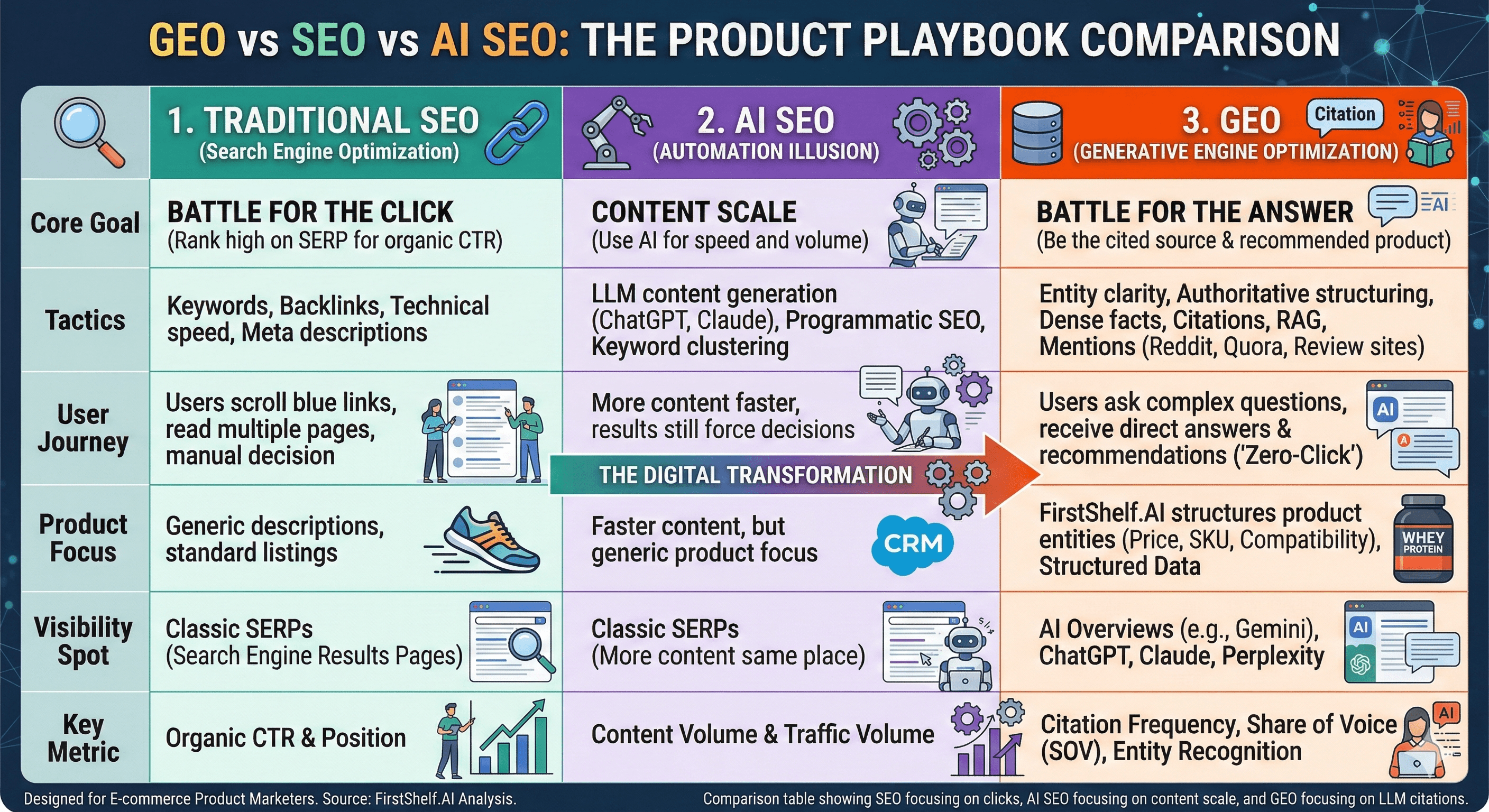
Search is shifting from clicking links to getting direct answers. Discover the critical differences between GEO, SEO, and AI SEO, and why optimizing for AI engines is the ultimate strategy for product visibility.